When I first moved here from Utah in 2010 to turn an old fast-food building into our flagship Hau’ula location, I learned a hard truth about the restaurant industry.
Most people assume that if they are eating near the ocean, the fish on their plate must have been swimming nearby just hours ago.
The reality is usually much colder and travels a lot further.
This misconception is why I get asked one question more than any other: “Does using fresh fish really make that big of a difference?”
My answer is always the same.
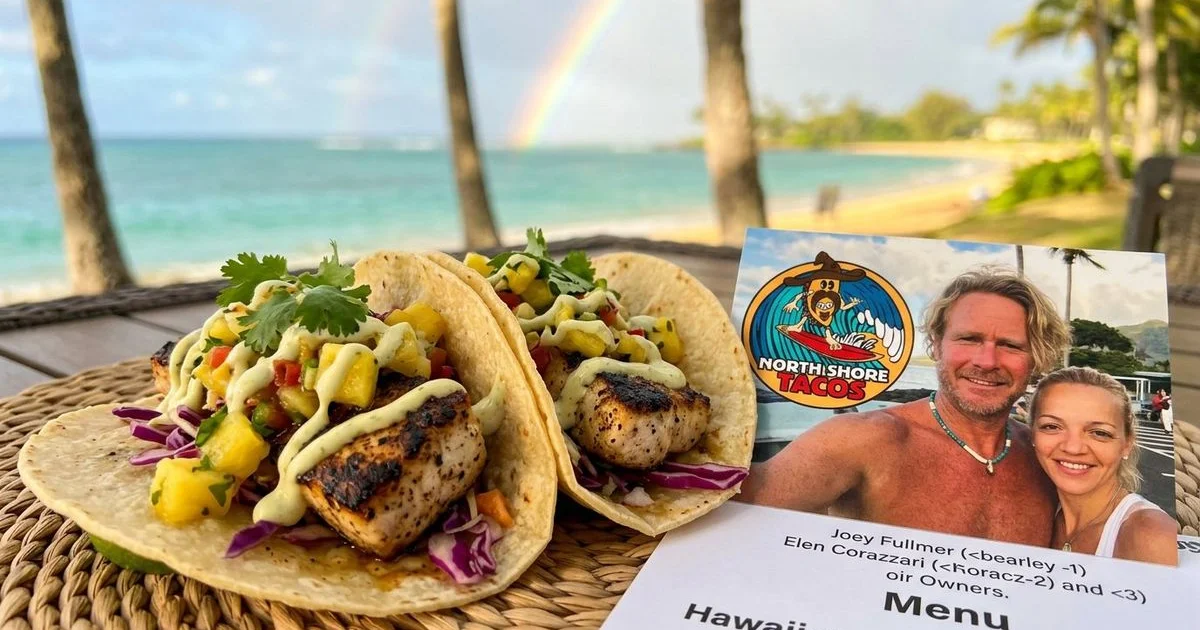
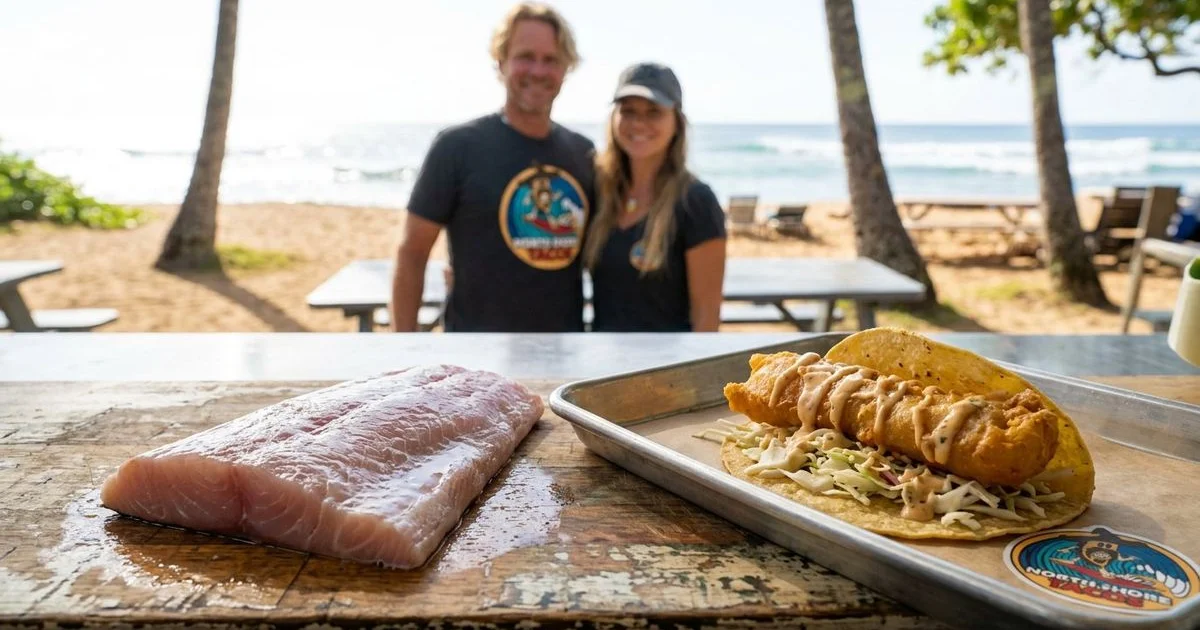
You can taste the answer in your first bite of our Original Fish Taco.
The Reality of Most Restaurant Fish
It shocks many of our customers to learn just how far their “local” catch actually traveled.
According to the most recent “Fisheries of the United States” report by NOAA, between 70% and 85% of the seafood consumed in this country is imported.
In Hawaii, that number is surprisingly high as well.
Restaurants rely on frozen imports for a simple business reason: predictability.
Frozen fillets from broadline distributors allow owners to calculate exact food costs months in advance without worrying about storms or bad fishing days.
This approach creates a consistent product, but it sacrifices the very soul of the dish.
We chose a different path at North Shore Tacos because we believe flavor should never take a backseat to logistics.
The Science: Why Freezing Ruins Texture
The difference isn’t just snobbery; it is basic chemistry.
When fish is frozen slowly—which happens often in standard commercial processing—the water inside the fish’s cells turns into ice crystals.
Water expands by about 9% when it freezes.
These expanding sharp crystals puncture the delicate cell walls of the fish meat like thousands of tiny needles.
Understanding “Drip Loss”
Once that fish is thawed, the damage becomes obvious.
The liquid that leaks out of the meat is what food scientists call “drip loss.”
That puddle you see under thawing fish isn’t just water; it is the cellular fluid containing the proteins, fats, and minerals that give the fish its flavor.
Here is exactly what that cellular damage does to your taco:
- The Texture Turns Mushy: Since the cell walls are ruptured, the structural integrity of the meat collapses.
- The Batter Slides Off: Excess moisture escaping from the damaged cells steams the batter from the inside, making it soggy instead of crunchy.
- The Flavor Flattens: You lose the natural sweetness of the ocean and are left with a bland protein that needs heavy sauces to hide its lack of taste.
Fresh vs. Frozen: The Quantified Comparison
You don’t need a degree in marine biology to spot the difference.
We broke down the specific sensory differences you can look for the next time you order seafood.
| Feature | Fresh Local Catch | Standard Frozen Import |
|---|---|---|
| Texture | Firm, elastic, and bounces back when pressed. | Soft, mushy, or completely falls apart. |
| Visuals | Translucent, glossy sheen. | Opaque, dull, or chalky white appearance. |
| Smell | Clean, mild, like the ocean breeze. | Strong “fishy” odor or ammonia-like scent. |
| Cooking | Retains moisture; flakes into large chunks. | Shrinks significantly; releases gray liquid. |
| Batter | Stays crispy and adheres to the meat. | Often separates or becomes soggy quickly. |
How We Do It Differently
We decided back in 2010 that if we couldn’t do it right, we wouldn’t do it at all.
Using fresh, local fish is the most difficult logistical challenge we face.
Our menu changes based on what the ocean decides to give us that morning.
But this commitment is what separates a fast-food taco from a culinary experience.
Our Daily “Dock-to-Plate” Routine
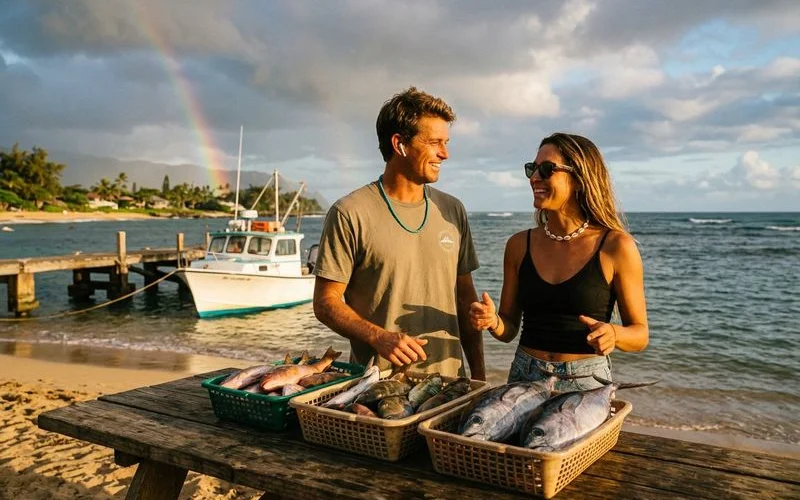
6:00 AM: Local fishermen launch from harbors like Haleiwa and Kahuku, targeting species like Mahimahi and Ono (Wahoo).
10:00 AM: The boats return, and we inspect the catch immediately at the dock or receive direct deliveries to our back door.
11:00 AM: Our kitchen team hand-cuts the whole fish into fillets.
12:00 PM: You order your taco, and we grill or batter that fish for the very first time.
There is no warehouse, no long-term freezer storage, and no middleman adding weeks to the timeline.
Why Fresh Matters Even More in Hawaii
We are lucky to be surrounded by some of the most fertile fishing grounds on the planet.
The channels between Oahu and our neighboring islands are highways for pelagic game fish.
Importing frozen tilapia or cod to Hawaii is like bringing sand to the beach.
Supporting Our Neighbors
Our choice to buy local goes beyond taste.
Buying directly from the fleet supports the families in our community who have fished these waters for generations.
The money stays here on the North Shore rather than going to a conglomerate overseas.
It ensures that the fishing tradition remains viable for the future of our island.
Come Taste the Difference
Reading about it is one thing, but tasting it is the only proof that matters.
We invite you to stop by our original Hau’ula restaurant or visit the Shark’s Cove food truck after a day at the beach.
Order the daily catch and perform the “fork test” yourself.
Press down on the fish and watch how it springs back.
That resilience is the sign of a fish that was swimming this morning.
Sunset Magazine didn’t name us the #1 Fish Tacos in Hawaii because we have a secret sauce.
They picked us because we respect the fish enough to serve it the way nature intended.